FlexGuard Official Website › Blog › Joint Comfort Is Not Arthritis | Where A Claim Stops
Joint Comfort Is Not Arthritis: Where A Supplement Label Has To Stop
- Supports joint comfort is a structure and function claim, and is allowed.
- Relieves arthritis is a disease claim, and would make the product a drug.
- A claim can be made implicitly, by a name, a photograph or a testimonial.
- The cost of a disease claim is what it invites a buyer to stop doing.
- Both guidelines put exercise, weight management and education ahead of the shelf.
Two sentences, and the line between them
Put these two sentences side by side. Supports joint comfort and mobility. Relieves arthritis pain.
They sound like the same promise expressed with different amounts of enthusiasm. They are not. The first is a claim a dietary supplement is allowed to make. The second is a claim about a disease, which would make the product a drug, and a drug requires approval that no supplement on any shelf has.
The line between them is the single most useful thing a buyer can learn to see, because a seller who crosses it has told you something about their judgement that no amount of reading their ingredient list would have revealed.
What a structure and function claim is
A structure and function claim describes an effect on the normal structure or function of the body. Supports joint comfort. Helps maintain mobility. Supports the body in coping with everyday joint stress.
Three things are true about these claims. They do not require pre-approval. They do require the seller to hold substantiation, meaning evidence they could produce if asked. And they have to be accompanied by the disclaimer every reader of a supplement label has learned to skip past: these statements have not been evaluated by the Food and Drug Administration.
The FDA's own questions and answers on dietary supplements is the plainest short description of the arrangement, and it is written for buyers rather than for lawyers.
The claims on this carton are of exactly this kind: joint comfort and mobility, and everyday joint stress. That is the ceiling, and it is why nothing on this website goes further.
What a disease claim is, and why a supplement may not make one
A disease claim says a product diagnoses, treats, cures, prevents or mitigates a specific condition. Relieves arthritis. Reverses cartilage loss. Stops joint degeneration.
A product making one of those claims is, in regulatory terms, being sold as a drug, and it would need the approval process that goes with that. This is not a technicality invented to inconvenience small businesses. It is the mechanism by which a claim that somebody's condition will improve has to be backed by evidence that it does.
The Federal Trade Commission's health products guidance covers the advertising side of the same line, and it is blunt about what substantiation means: competent and reliable scientific evidence, of a kind that matches the strength of the claim being made.
A claim can also be made implicitly. A product named after a condition, or photographed beside an x-ray, or sold with a testimonial describing a diagnosis, has made a disease claim without a single offending sentence.
| Sentence | Which kind of claim | Allowed on a supplement? |
|---|---|---|
| Supports joint comfort and mobility | Structure and function | Yes |
| Helps the body cope with everyday joint stress | Structure and function | Yes |
| Relieves the pain of osteoarthritis | Disease | No |
| Prevents cartilage loss | Disease | No |
| Recommended for people with arthritis | Disease, implicitly | No |
| Clinically proven to rebuild joints | Disease, plus an evidence claim | No |
The first two are the claims on this carton. The other four are the shapes to watch for on any page selling a joint product.
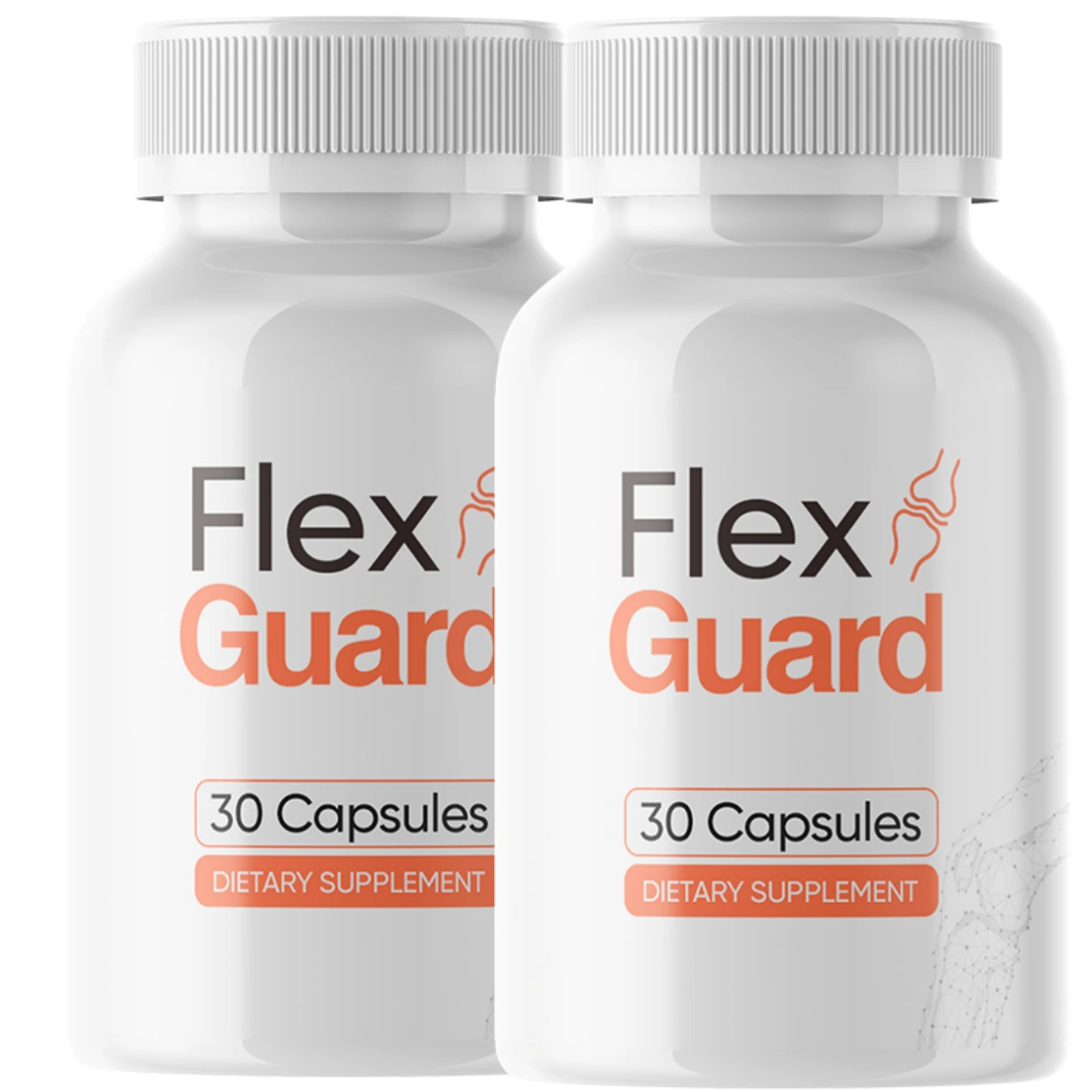
The FlexGuard carton makes two claims and stops
Joint comfort and mobility, and everyday joint stress. Nothing on this website goes further than those two sentences, and the disclaimer page says why.
Two bottles $158 · six bottles $294 · 60 days from the date of purchase
Order FlexGuard On The Official WebsiteOne capsule a day · 30 per bottle · lot FLE-26/GO-6202
Reading a marketing page against the carton behind it
The useful exercise is to read a product's marketing and its label as two separate documents and see whether they agree.
A carton is a regulated surface and sellers are usually careful with it. A landing page, an advertisement or a social post is where the line gets crossed, and it is crossed most often by implication rather than by statement.
Look for the gap. If the box says supports joint comfort and the page says people with arthritis are finally walking again, you are looking at two different claims about the same product, and only one of them is the one the seller would defend.
There is a second version of the same test that applies to evidence. A page that names an ingredient's clinical research while the panel carries a fraction of that research's amount is borrowing a result. That is not a disease claim, but it is the same move: the reputation of something stronger attached to something weaker.
Read the carton, then read the page that sold it to you, then ask whether a stranger given only the carton would have expected the page. Where the two diverge, the carton is the document the seller had to stand behind.
Why the line is in the buyer's interest and not only the regulator's
It is easy to read all of this as a rule that exists to protect regulators from paperwork. The buyer's interest in it is more direct than that.
A supplement sold for joint comfort is something you can try, assess over a couple of months and stop. A product sold as a treatment for a condition invites a different decision: it invites you to treat the condition with it, which can mean not doing something else.
That is the real cost of a disease claim, and it has nothing to do with whether the capsule is any good. Somebody who believes a supplement is managing their arthritis may not get the assessment that would have told them which kind of arthritis they have, and the two main kinds are managed very differently.
The line, in other words, is not about the product. It is about what the product is allowed to displace.
Three phrases that look like claims and are not
Once you start looking for the line, a second problem appears: a lot of supplement language is neither a legal claim nor a statement of fact.
Supports. The workhorse verb of the whole industry. It is permitted precisely because it is vague, asserting a contribution without asserting an outcome. It is not dishonest and it is not informative, and a page built entirely out of it has told you nothing.
Helps maintain. A claim about keeping something as it is, which is unfalsifiable over any period a buyer would run. Nothing got worse is not a result anybody can attribute.
Clinically studied ingredients. The most slippery of the three, because it is usually true and almost never relevant. It says a trial exists somewhere involving that ingredient. It says nothing about the amount in this product, the preparation, or what the trial found, and it is entirely compatible with a trial that failed.
None of these three is worth objecting to. They are worth recognising, so that a page made of them gets read as the marketing it is rather than as evidence.
What substantiation actually means
The word that does real work in this area is substantiation, and it has a specific meaning rather than a rhetorical one.
The FTC guidance describes it as competent and reliable scientific evidence, matched to the strength of the claim. A stronger claim needs stronger evidence, an express claim and an implied claim are both held to it, and the evidence has to concern the product or an ingredient at the amount used.
That last clause is the one that matters most to a reader of panels. Substantiation for an ingredient at 1,500 mg is not substantiation for that ingredient at 500 mg, and it is certainly not substantiation for it at 8 mg. A seller is not entitled to borrow a trial result across an order of magnitude.
This is why the ingredient pages on this website print two columns rather than one. A single column of names invites the reader to supply the research themselves, and they will supply the research for the amount the trial used, not the amount in the capsule.
What the guidelines put ahead of every supplement
Both major treatment guidelines put the same three things ahead of every supplement they reviewed, and neither of them is cautious about saying so.
The American College of Rheumatology guideline strongly recommends exercise, weight management where it applies, and self-management education. The OARSI guideline reaches a compatible ordering by a different route.
Those three have better evidence than anything on the supplement shelf, they are free or nearly free, and they have no allergen line. A page that sells a supplement without saying so has left out the most useful paragraph it could have written.
The NIH institute that studies joint disease and MedlinePlus are both written for the public and both start in the same place.
- Exercise has the strongest evidence in the field and is recommended for almost everyone.
- Weight management, where it applies, changes the load on a joint directly.
- Self-management education is itself a recommended intervention.
- A diagnosis tells you which condition you are managing, and they differ.
- A supplement is the last item on that list, not a substitute for the first four.
When joint pain is a question for an assessment
The last thing a page like this owes a reader is a short list of the things that are not supplement questions at all.
- A joint that is hot, red or visibly swollen.
- A joint that locks, catches or gives way under you.
- Pain that wakes you at night, or that is worse at rest than in use.
- A joint that changed suddenly, or after a specific injury.
- Fever, weight loss, or several joints changing at once.
- Pain that has stopped you doing something you were doing a month ago.
None of those is a reason to panic and all of them are reasons to be looked at once. A supplement for everyday joint comfort is a reasonable thing to take alongside an answer. It is a poor substitute for one.
What this particular carton claims, and the full text of what it does not, is set out on the benefits page, and every limit this site operates under is collected on the disclaimer.
- Questions and Answers on Dietary Supplements. U.S. Food and Drug Administration. https://www.fda.gov/food/information-consumers-using-dietary-supplements/questions-and-answers-dietary-supplements
- Health Products Compliance Guidance. U.S. Federal Trade Commission, December 2022. https://www.ftc.gov/business-guidance/resources/health-products-compliance-guidance
- Kolasinski SL, Neogi T, Hochberg MC, et al. 2019 American College of Rheumatology/Arthritis Foundation guideline for the management of osteoarthritis of the hand, hip, and knee. Arthritis Rheumatol. 2020;72(2):220-233. PMID 31908163. https://pubmed.ncbi.nlm.nih.gov/31908163/
- Bannuru RR, Osani MC, Vaysbrot EE, et al. OARSI guidelines for the non-surgical management of knee, hip, and polyarticular osteoarthritis. Osteoarthritis Cartilage. 2019;27(11):1578-1589. PMID 31278997. https://pubmed.ncbi.nlm.nih.gov/31278997/
- Osteoarthritis. National Institute of Arthritis and Musculoskeletal and Skin Diseases, National Institutes of Health. https://www.niams.nih.gov/health-topics/osteoarthritis
- Osteoarthritis. MedlinePlus, U.S. National Library of Medicine. https://medlineplus.gov/osteoarthritis.html
FlexGuard claims joint comfort and mobility, and nothing beyond it
Two structure and function sentences on the carton, and a site written to stay inside them.
Two bottles $158 · six bottles $294 · 60 days from the date of purchase
Order FlexGuard On The Official WebsiteOne capsule a day · 30 per bottle · lot FLE-26/GO-6202