FlexGuard Official Website › Joint Supplement Guide
Joint Supplement GuideThe Joint Supplement Guide: What Is In These Bottles
Six ingredients carry almost the whole category.
Glucosamine, chondroitin, Boswellia, curcumin from turmeric, MSM and collagen peptides. Each has a human trial record, each was tested at an amount you can look up, and none of them acts in a week. Everything else on the shelf is either one of those six under another name or a compound with no trial record at all.
Written for somebody standing in front of a shelf. It names the amounts the trials used, because an ingredient name without an amount is the least useful thing a label can give you.
What a joint supplement is trying to do
Joint discomfort from ordinary wear has two components. One is mechanical: cartilage thins, the surfaces run less smoothly and the joint loads differently. The other is inflammatory: the tissue around the joint responds, and that response is a large part of what a person actually feels.
The supplement shelf splits along the same line. Half of it supplies raw materials the body uses in cartilage. The other half contains plant compounds that act on inflammatory signalling. A broad capsule usually takes something from each side.
What no supplement does is replace what the rheumatology guideline recommends most strongly, which is exercise, weight management and self-management. Those are free, they have the strongest evidence in the whole field, and a bottle is an addition to them rather than an alternative.
The six ingredients with a real trial record
| Ingredient | What the trials used | What they found |
|---|---|---|
| Glucosamine sulfate | 1,500 mg a day, often split in three | Divided. A three-year trial reported less joint space narrowing; the large American trial found no benefit over placebo on its main outcome. |
| Chondroitin sulfate | 800–1,200 mg a day | A small improvement in pain across 43 trials, shrinking as trial quality rose. |
| Boswellia serrata | 100–250 mg a day standardised to 30% AKBA | The best-ranked supplement in a 2025 network analysis of 39 trials, for pain and for stiffness. |
| Curcumin from turmeric | 1,500–2,000 mg a day of extract | Consistent improvement in pain scores across eleven meta-analyses, with absorption the limiting factor. |
| MSM | 1.5–6 g a day | Promising and thin, in the reviewers' own words. One 2 gram trial in mild knee pain reported an improvement in quality of life. |
| Bromelain | 200–1,890 mg a day | Mixed. Better at 400 mg than 200 mg in an open study, and no better than placebo at 800 mg in a controlled one. |
Every figure in the middle column is the amount administered in the published work, not a recommendation. Sources for each are linked in the sections below.
Two things fall out of that table immediately. The amounts are large, mostly in the hundreds or thousands of milligrams. And the evidence is genuinely divided rather than uniformly positive, which is why this category attracts both fierce advocates and flat dismissals.
Glucosamine and chondroitin, the pair everyone starts with
They are sold together because they are found together, in cartilage and in the fluid that lubricates a joint.
The evidence splits along an awkward line. A three-year European trial of glucosamine sulphate at 1,500 mg once a day reported less joint space narrowing than placebo. The GAIT trial, using 500 mg of glucosamine hydrochloride three times a day with or without 400 mg of chondroitin three times a day, found no benefit over placebo on its primary outcome. The two used different salts, different sponsors and different populations, and the argument about which matters most has not settled.
The Cochrane review of chondroitin pooled 43 trials and 9,110 people. It found a small improvement in pain, and the effect got smaller as the quality of the trials rose, which is the pattern a real but modest effect and the pattern a bias artefact both produce.
The NIH centre's own summary is the fairest short read: some people report relief, the trial evidence is mixed, and it is not harmful for most people to try.
If you are going to try glucosamine, try it at the amount that was tested, which is 1,500 mg a day, and give it three months. Anything less than that is an experiment nobody has run.
Boswellia, which has quietly become the strongest of them
Indian frankincense resin. Its boswellic acids inhibit 5-lipoxygenase, an enzyme in one arm of inflammatory signalling.
A 2025 network meta-analysis of 39 randomised trials covering 4,599 patients ranked it first of the supplements it compared, for pain and for stiffness. An earlier meta-analysis of seven trials reached a compatible conclusion on a smaller pool. For a category where most results are equivocal, that is a notable finding and it is not widely known.
The catch is specification. The dose-ranging trial used extracts standardised to 30 per cent AKBA at 100 mg and 250 mg a day. An earlier trial used 333 mg of crude extract three times a day. A label that gives a herb weight with no standardisation figure cannot be compared with either, and most labels give exactly that.
Turmeric, and why absorption decides it
Curcuminoids are the studied fraction of turmeric root. An umbrella review of eleven meta-analyses found consistent improvement in pain scores, and a 367-patient trial put 1,500 mg a day of extract against ibuprofen at 1,200 mg a day for four weeks.
Curcumin taken on its own is poorly absorbed, which is why serious products add something to raise it and why a plain turmeric row is harder to judge than it looks. A label that names the root and gives a weight has told you less than a label that names a curcuminoid percentage.
Worth knowing at the high end: a case series of liver injury associated with turmeric products exists, almost all of it at large amounts and several cases involving high-absorption formulations.
How long any of this takes
| Ingredient | Shortest useful study | Reasonable point to judge |
|---|---|---|
| Boswellia | Four weeks | Six to eight weeks |
| Curcumin | Four weeks | Six to eight weeks |
| MSM | Twelve weeks | Twelve weeks |
| Glucosamine | Six months in the long trials | Three months |
| Chondroitin | Six months | Three months |
| Bromelain | One month | Six weeks |
The right column is a planning figure, not a promise. It is the point at which the published work would first have measured anything.
Nothing in this category acts in a week and nobody selling it should imply otherwise. The practical consequence is about pack size: a bottle that runs out before the earliest sensible assessment point has not been tested, it has been sampled.
What beats every supplement in this guide
- Exercise. Strengthening and range-of-movement work has the strongest evidence in the whole field and is recommended for essentially everyone.
- Weight management, where it applies. Load on a knee is not a metaphor.
- Self-management education. Knowing what a joint responds to is a recommended intervention in its own right.
- Getting a diagnosis once. Several conditions produce joint pain and they are managed differently. MedlinePlus and the NIH institute that studies them are the two plainest starting points.
The OARSI treatment guideline and the American College of Rheumatology guideline agree on that ordering. A supplement is the last item on a list, and a page selling one is still obliged to say what the first three are.
Sources for this guide
Twenty-one sources. Every amount in the tables above is read from one of them rather than from a product page.
- Clegg DO, Reda DJ, Harris CL, et al. Glucosamine, chondroitin sulfate, and the two in combination for painful knee osteoarthritis. N Engl J Med. 2006;354(8):795-808. PMID 16495392. Dose: glucosamine hydrochloride 500 mg three times a day, chondroitin sulfate 400 mg three times a day, for 24 weeks. https://pubmed.ncbi.nlm.nih.gov/16495392/
- Reginster JY, Deroisy R, Rovati LC, et al. Long-term effects of glucosamine sulphate on osteoarthritis progression: a randomised, placebo-controlled clinical trial. Lancet. 2001;357(9252):251-6. PMID 11214126. Dose: 1,500 mg once a day for three years. https://pubmed.ncbi.nlm.nih.gov/11214126/
- Towheed TE, Maxwell L, Anastassiades TP, et al. Glucosamine therapy for treating osteoarthritis. Cochrane Database Syst Rev. 2005;2005(2):CD002946. PMID 15846645. https://pubmed.ncbi.nlm.nih.gov/15846645/
- Glucosamine and Chondroitin for Osteoarthritis: What You Need To Know. National Center for Complementary and Integrative Health, National Institutes of Health. https://www.nccih.nih.gov/health/glucosamine-and-chondroitin-for-osteoarthritis
- Singh JA, Noorbaloochi S, MacDonald R, Maxwell LJ. Chondroitin for osteoarthritis. Cochrane Database Syst Rev. 2015;1(1):CD005614. PMID 25629804. Forty-three trials, 9,110 participants, most using 800 to 1,200 mg a day. https://pubmed.ncbi.nlm.nih.gov/25629804/
- Kahan A, Uebelhart D, De Vathaire F, Delmas PD, Reginster JY. Long-term effects of chondroitins 4 and 6 sulfate on knee osteoarthritis: the study on osteoarthritis progression prevention, a two-year, randomized, double-blind, placebo-controlled trial. Arthritis Rheum. 2009;60(2):524-33. PMID 19180484. Dose: 800 mg a day for two years. https://pubmed.ncbi.nlm.nih.gov/19180484/
- Yu G, Xiang W, Zhang T, Zeng L, Yang K, Li J. Effectiveness of Boswellia and Boswellia extract for osteoarthritis patients: a systematic review and meta-analysis. BMC Complement Med Ther. 2020;20(1):225. PMID 32680575. Seven trials, 545 patients; the pooled evidence covers four weeks and longer. https://pubmed.ncbi.nlm.nih.gov/32680575/
- Sengupta K, Alluri KV, Satish AR, et al. A double blind, randomized, placebo controlled study of the efficacy and safety of 5-Loxin for treatment of osteoarthritis of the knee. Arthritis Res Ther. 2008;10(4):R85. PMID 18667054. Doses: 100 mg and 250 mg a day of an extract standardised to 30 per cent 3-O-acetyl-11-keto-beta-boswellic acid. Funded by the extract's manufacturer. https://pubmed.ncbi.nlm.nih.gov/18667054/
- Kimmatkar N, Thawani V, Hingorani L, Khiyani R. Efficacy and tolerability of Boswellia serrata extract in treatment of osteoarthritis of knee: a randomized double blind placebo controlled trial. Phytomedicine. 2003;10(1):3-7. PMID 12622457. Dose: 333 mg three times a day. https://pubmed.ncbi.nlm.nih.gov/12622457/
- Zhang Y, Gui Y, Adams R, et al. Comparative effectiveness of nutritional supplements in the treatment of knee osteoarthritis: a network meta-analysis. Nutrients. 2025;17(15):2547. PMID 40806131. Thirty-nine randomised trials, 4,599 patients; Boswellia ranked first for pain and stiffness. https://pubmed.ncbi.nlm.nih.gov/40806131/
- Bideshki MV, Jourabchi-Ghadim N, Radkhah N, et al. The efficacy of curcumin in relieving osteoarthritis: a meta-analysis of meta-analyses. Phytother Res. 2024;38(6):2875-2891. PMID 38576215. https://pubmed.ncbi.nlm.nih.gov/38576215/
- Kuptniratsaikul V, Dajpratham P, Taechaarpornkul W, et al. Efficacy and safety of Curcuma domestica extracts compared with ibuprofen in patients with knee osteoarthritis: a multicenter study. Clin Interv Aging. 2014;9:451-8. PMID 24672232. Dose: 1,500 mg a day of Curcuma domestica extract against ibuprofen 1,200 mg a day for four weeks. https://pubmed.ncbi.nlm.nih.gov/24672232/
- Halegoua-DeMarzio D, Navarro V, Ahmad J, et al. Liver injury associated with turmeric, a growing problem: ten cases from the Drug-Induced Liver Injury Network. Am J Med. 2023;136(2):200-206. PMID 36252717. https://pubmed.ncbi.nlm.nih.gov/36252717/
- Butawan M, Benjamin RL, Bloomer RJ. Methylsulfonylmethane: applications and safety of a novel dietary supplement. Nutrients. 2017;9(3):290. PMID 28300758. Human studies have used 1.5 to 6 g a day. https://pubmed.ncbi.nlm.nih.gov/28300758/
- Toguchi A, Noguchi N, Kanno T, Yamada A. Methylsulfonylmethane improves knee quality of life in participants with mild knee pain: a randomized, double-blind, placebo-controlled trial. Nutrients. 2023;15(13):2995. PMID 37447322. Dose: 2 g a day for twelve weeks. https://pubmed.ncbi.nlm.nih.gov/37447322/
- Walker AF, Bundy R, Hicks SM, Middleton RW. Bromelain reduces mild acute knee pain and improves well-being in a dose-dependent fashion in an open study of otherwise healthy adults. Phytomedicine. 2002;9(8):681-6. PMID 12587686. Doses: 200 mg and 400 mg a day for one month. https://pubmed.ncbi.nlm.nih.gov/12587686/
- Brien S, Lewith G, Walker AF, Middleton R, Prescott P, Bundy R. Bromelain as an adjunctive treatment for moderate-to-severe osteoarthritis of the knee: a randomized placebo-controlled pilot study. QJM. 2006;99(12):841-50. PMID 17121765. Dose: 800 mg a day for twelve weeks; it did not beat placebo. https://pubmed.ncbi.nlm.nih.gov/17121765/
- Kolasinski SL, Neogi T, Hochberg MC, et al. 2019 American College of Rheumatology/Arthritis Foundation guideline for the management of osteoarthritis of the hand, hip, and knee. Arthritis Rheumatol. 2020;72(2):220-233. PMID 31908163. https://pubmed.ncbi.nlm.nih.gov/31908163/
- Bannuru RR, Osani MC, Vaysbrot EE, et al. OARSI guidelines for the non-surgical management of knee, hip, and polyarticular osteoarthritis. Osteoarthritis Cartilage. 2019;27(11):1578-1589. PMID 31278997. https://pubmed.ncbi.nlm.nih.gov/31278997/
- Osteoarthritis. MedlinePlus, U.S. National Library of Medicine. https://medlineplus.gov/osteoarthritis.html
- Osteoarthritis. National Institute of Arthritis and Musculoskeletal and Skin Diseases, National Institutes of Health. https://www.niams.nih.gov/health-topics/osteoarthritis
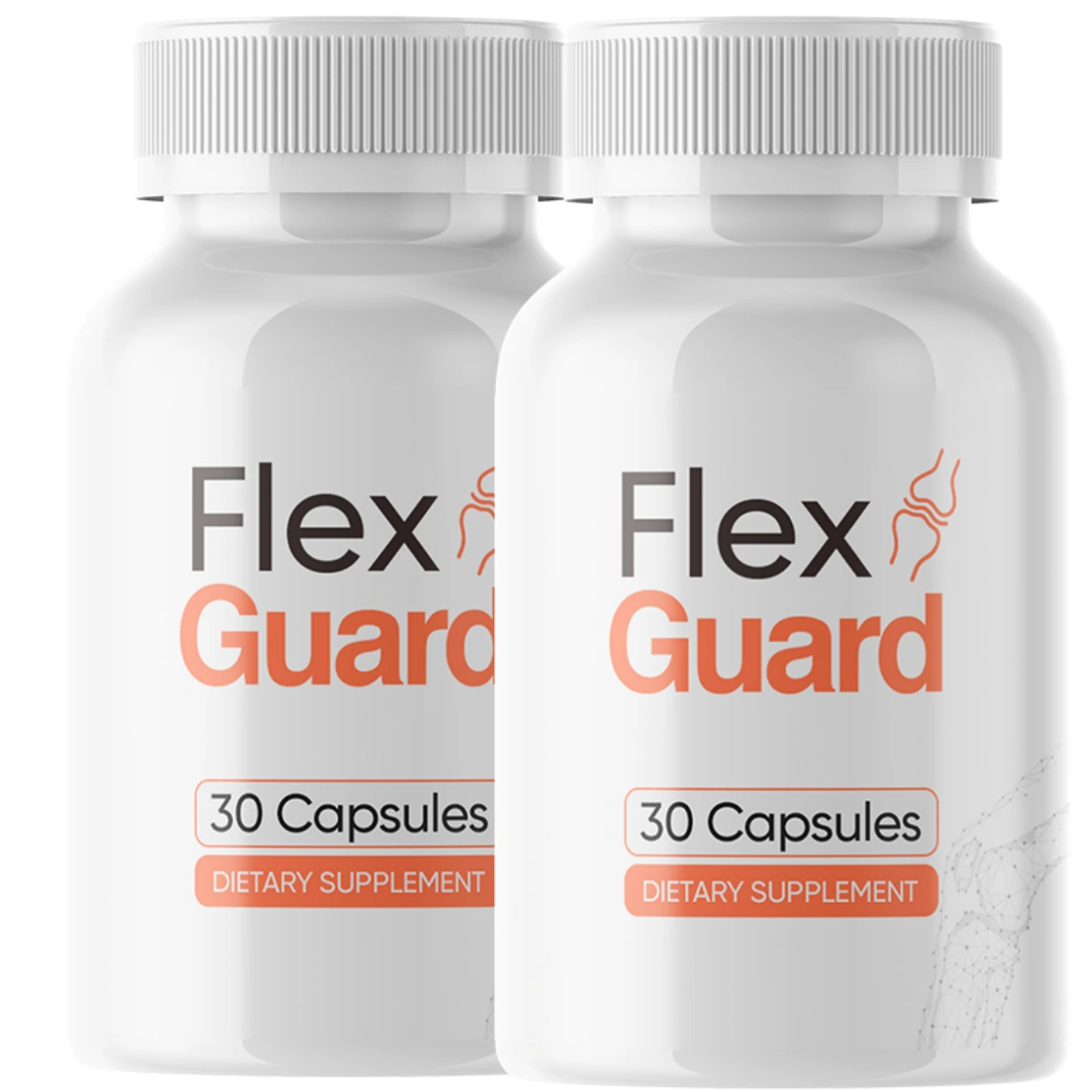
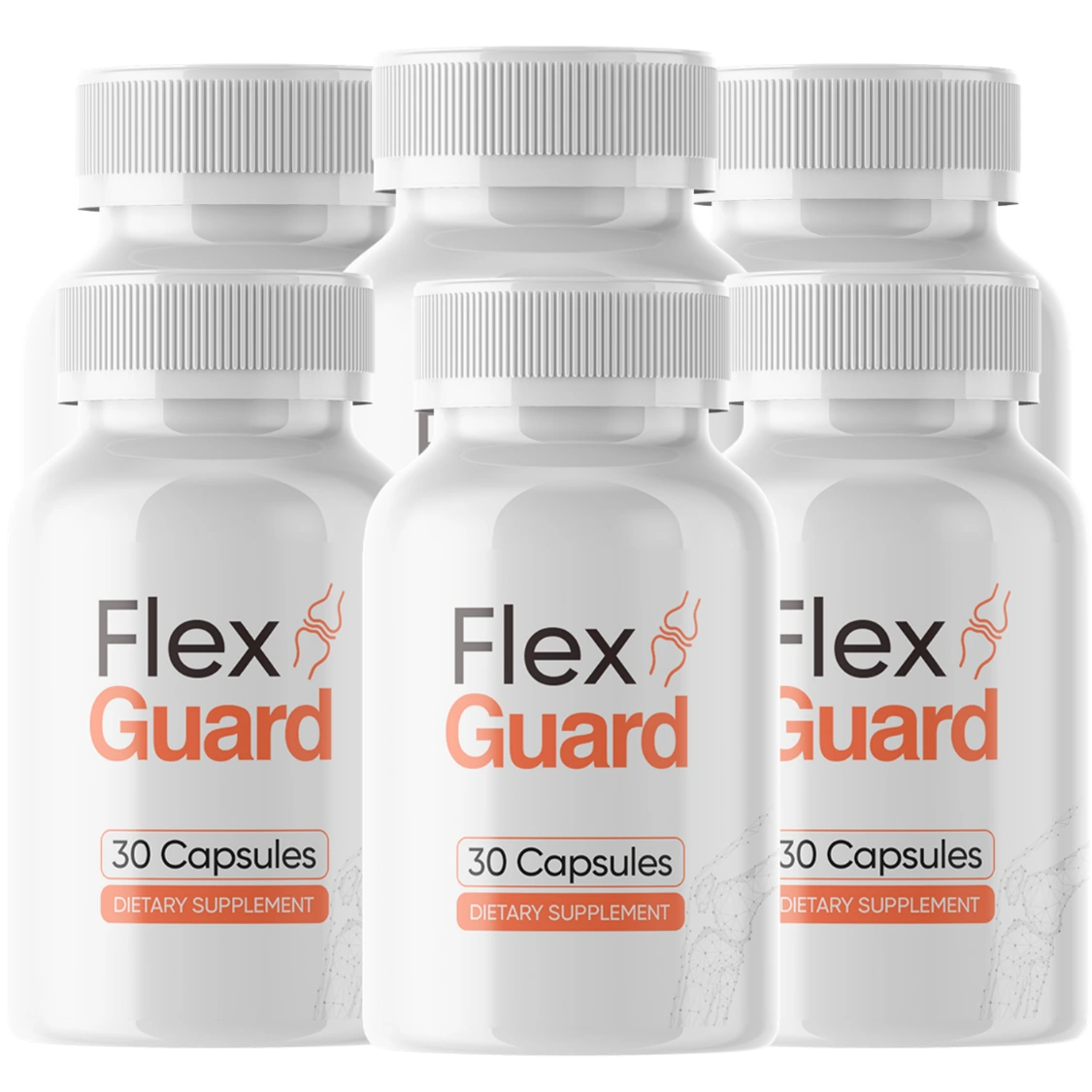
FlexGuard is one answer to the question this guide asks
It carries five of the six ingredients above, at amounts this guide lets you check for yourself. The ingredients page prints both columns side by side.
Two bottles $158 · six bottles $294 · 60 days from the date of purchase
Order FlexGuard On The Official WebsiteOne capsule a day · 30 per bottle · lot FLE-26/GO-6202