FlexGuard Official Website › Testing & Quality
Testing & QualityFlexGuard Testing And Quality: Four Badges Audited
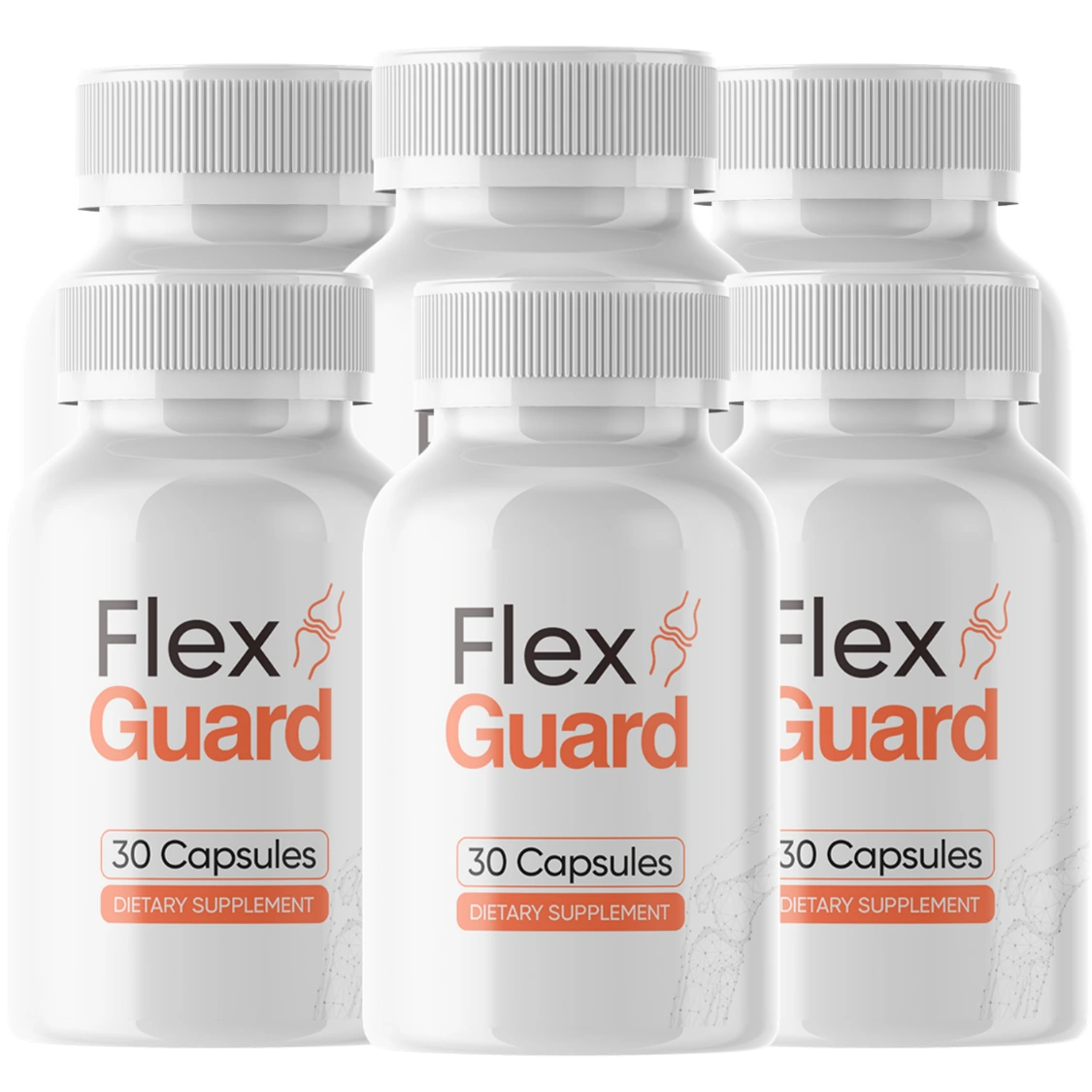
Four badges are printed on this packaging and two of them name nobody.
Good Manufacturing Practice and FDA-registered facility are both statements about a factory rather than about this bottle, and neither identifies an auditor. The origin badge is a sourcing statement and the money-back seal is a purchase policy. None of the four is a test result.
A badge audit is the least flattering page a retailer can publish about its own product, which is exactly why it is worth publishing. Each one is read out loud here, in the order they appear on the box.
The four FlexGuard badges, one at a time
Four badges, four different kinds of statement. Read the third sentence of each one.
 GMPGood Manufacturing Practice describes how a facility documents and controls what it makes. It is a real regulatory framework. This badge names no certifying body and no audit date, so it is a claim about a system rather than a receipt from one.
 FDA-registered facilityEvery food facility supplying the United States registers with the FDA. Registration is a filing, not an inspection and not an approval. The FDA approves no dietary supplement, and a roundel that reads registered is often misread as one that reads approved.
 US-made, globally sourcedThis one is unusually candid. The carton line reads manufactured in the USA with globally sourced ingredients, which says the capsule was filled in the United States and the contents were bought wherever they were cheapest or best. Both halves are true and most labels only print the first.
 60-day satisfactionA purchase policy rather than a quality mark, and the length of a refund window is not evidence about a formula. Two documents word its start date differently, and both are quoted on the guarantee page.
What FlexGuard does not carry
| Mark | Present on this product? |
|---|---|
| Third-party verification, such as USP | No |
| A published certificate of analysis | No. A reference number only |
| An organic certification | No |
| A named GMP certifying body | No |
| An allergen-free claim | No, and correctly so: it contains shellfish |
| A standardisation figure on the Boswellia row | No |
Six absent marks. Five of them are ordinary on this shelf and the sixth, the standardisation figure, is the one that would change how the formula reads.
It is worth saying what that list is not. None of these six absences makes a product unsafe or dishonest, and a badge wall is not a quality ranking. Third-party verification is genuinely useful and it is also rare, expensive and voluntary, so most of this category does without it.
What the list does do is separate the things this carton proves from the things a buyer might assume it proves. The carton proves a formula declaration, a distributor, a lot and a manufacturing location. It does not prove a measurement.
What the FlexGuard carton does prove
- A complete formula declaration: eight rows, eight weights, no blend total.
- A serving size and a servings-per-container count that agree with the bottle.
- An allergen declaration, which is a legal requirement and is load-bearing here.
- A named distributor with a postal address.
- A lot code and a best-before date on the bottle itself.
- A caution that excludes under-18s, pregnancy and nursing in the label's own words.
That is a compliant label doing its job. The federal rule for a Supplement Facts panel and the FDA's labelling guide set out what has to be on it, and this carton carries all of it. Being unimpressed by the badges and satisfied by the label is a coherent position, and it is this desk's.
How this desk checks a FlexGuard claim before printing it
The carton is the first source
Every amount, caution and allergen line on this site is transcribed from the artwork rather than from a sales page. Where the two differ, the carton is printed and the difference is named.
Every trial amount is read from the record
Publication type, journal, year and dose come out of the database entry for the paper, not from memory. A citation typed from memory is how a real paper acquires another paper's authors.
Retractions are swept twice
Once by paper and once by author. Three sources were dropped from this site's reference list on the second sweep, and the about page names them.
A figure nobody published is not printed
No transit window, no struck comparison price and no standardisation percentage appears anywhere on this site, because none of the three has been published.
What a GMP audit looks at, and what the FlexGuard badge stands for
Good Manufacturing Practice is the most-printed badge on this shelf and the least understood. It is a framework about records and control rather than a seal of quality, and knowing what it covers makes it easier to value correctly.
- Written procedures for everything. A facility has to have them, follow them, and be able to show it followed them.
- Identity testing on incoming material. Confirming that a sack labelled glucosamine is glucosamine.
- Batch records. Which materials went into which lot, in what order, on whose shift. This is where a lot code gets its meaning.
- Equipment cleaning and calibration, recorded rather than assumed.
- Complaint and recall procedures, so a problem found later can be traced back to a lot.
- Specifications for the finished product, and evidence that batches meet them.
All of that is worth having, and none of it is a statement that the formula is effective or that the amounts are generous. It is the difference between a product made carefully and a product designed well, and a buyer needs both answers from different documents.
The badge on this carton names no certifying body and no audit date, which is ordinary on this shelf and still worth noticing. A badge that names an auditor is a badge you can check.
Who publishes this FlexGuard quality page?
Six sources, all of them the rules a label and a claim have to obey.
- Dietary Supplements Verification Program. United States Pharmacopeia. https://www.usp.org/verification-services/dietary-supplements-verification-program
- 21 CFR 101.36, Nutrition labeling of dietary supplements. Electronic Code of Federal Regulations. https://www.ecfr.gov/current/title-21/chapter-I/subchapter-B/part-101/subpart-F/section-101.36
- Dietary Supplement Labeling Guide. U.S. Food and Drug Administration. https://www.fda.gov/food/dietary-supplements-guidance-documents-regulatory-information/dietary-supplement-labeling-guide
- Questions and Answers on Dietary Supplements. U.S. Food and Drug Administration. https://www.fda.gov/food/information-consumers-using-dietary-supplements/questions-and-answers-dietary-supplements
- Health Products Compliance Guidance. U.S. Federal Trade Commission, December 2022. https://www.ftc.gov/business-guidance/resources/health-products-compliance-guidance
- Using Dietary Supplements Wisely. National Center for Complementary and Integrative Health, National Institutes of Health. https://www.nccih.nih.gov/health/using-dietary-supplements-wisely
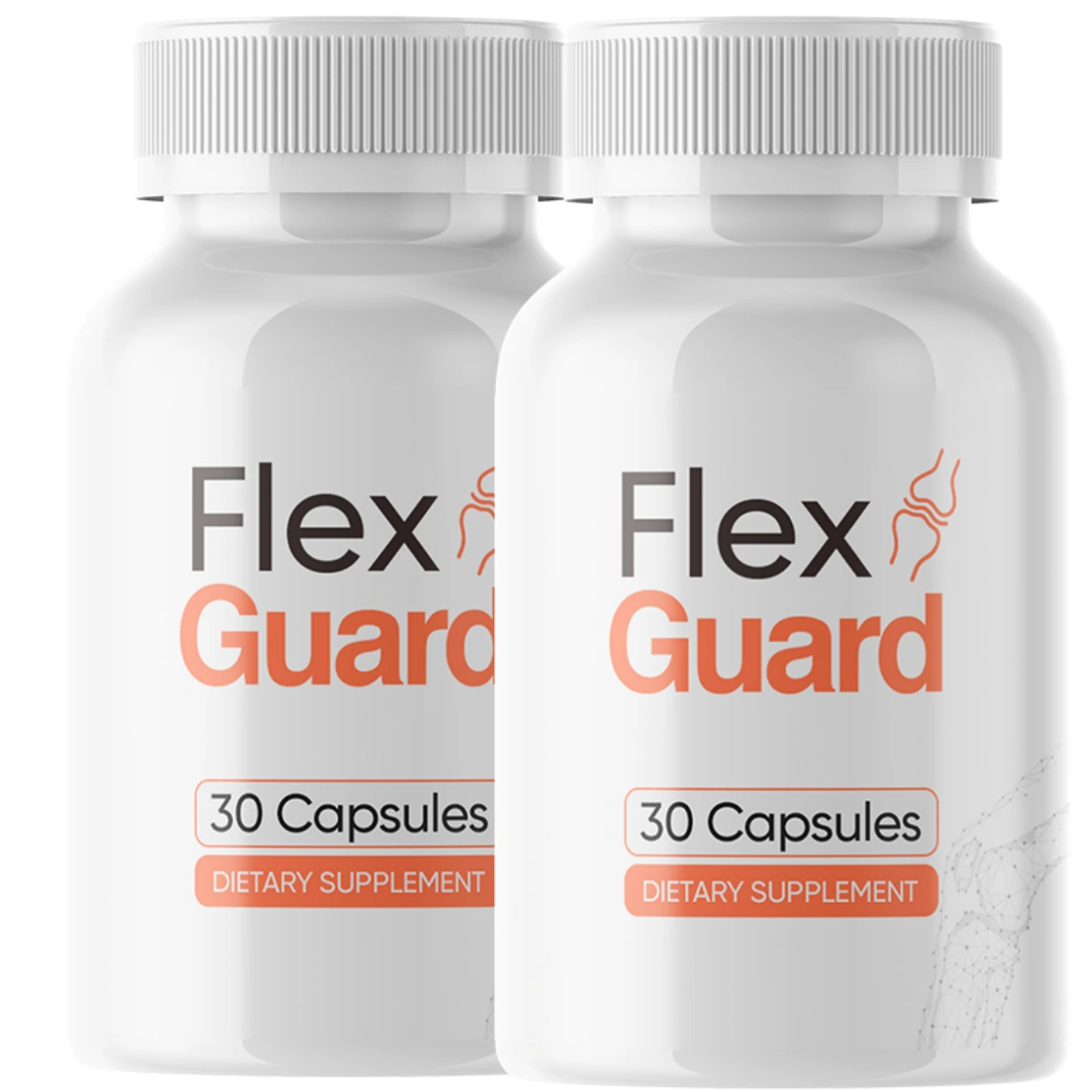
The FlexGuard badges are claims and the panel is a declaration
Four badges, two of which name nobody, and a formula declaration that carries a weight against every row. The second is the document worth reading.
Two bottles $158 · six bottles $294 · 60 days from the date of purchase
Order FlexGuard On The Official WebsiteOne capsule a day · 30 per bottle · lot FLE-26/GO-6202