FlexGuard Official Website › Blog › Shellfish In A Joint Capsule | The Allergen Line
Shellfish In A Joint Capsule: The Allergen Line On A Glucosamine Label
- Glucosamine is extracted from chitin, which comes from crustacean shell.
- A contains statement is a labelling requirement, not a courtesy.
- Fifteen shrimp-allergic adults tolerated 1,500 mg of shell-derived glucosamine.
- Fifteen people can show a reaction is not universal, not that it never happens.
- Fermented glucosamine, Boswellia and exercise are the three ways round it.
Why a joint capsule contains shellfish at all
It surprises people, and it should not. Glucosamine is an amino sugar extracted from chitin, and chitin is the structural material in the shells of crabs, shrimp, lobster and crayfish.
So a joint capsule containing glucosamine almost always contains something derived from shellfish, and the allergen line on this carton, which reads CONTAINS: SHELLFISH (CRAYFISH), is describing the ingredient rather than warning about a contamination event.
It is one of the few places in the supplement world where the allergen is not an accident of the factory but the origin of the active itself. That distinction matters for how seriously to take it, and it cuts in both directions.
What an allergen declaration on a supplement is
A declaration like this is a labelling requirement rather than a courtesy. A supplement sold in the United States has to declare major food allergens, and crustacean shellfish is one of them.
The FDA's labelling guide sets out how that declaration is made: either inside the ingredient list or in a separate contains statement immediately after it, which is the form this carton uses.
What the declaration does not do is tell you how much shellfish protein is present, because that is not what it is for. A contains statement is a yes or no about the presence of an allergenic source, and that is a deliberately conservative instrument.
It is worth knowing this because the conservatism is the point. A label that names an allergen has made a binary statement in your favour, and it has not attempted to tell you that a small amount would be fine.
The tolerance study, and what fifteen people can settle
There is a real study on precisely this question and it deserves to be read carefully rather than quoted as a headline.
Fifteen shrimp-allergic adults were given 1,500 mg of shrimp-derived glucosamine, which is the full trial amount, and none of them had an allergic reaction. The reasoning behind the result is mechanistic and sound: the protein that causes shellfish allergy is tropomyosin, which is in the flesh, and glucosamine is extracted from the shell.
That is genuinely useful information and it is fifteen people. A study of fifteen can demonstrate that a reaction is not universal. It cannot establish a rate for an uncommon event, and nobody involved in it claimed otherwise.
The other limitation is manufacturing. The study tested one preparation. How thoroughly shell is separated from flesh is a property of a process, not of a molecule, and a buyer cannot read that off a panel.
| What the study shows | What it does not show |
|---|---|
| Shell-derived glucosamine did not provoke a reaction in 15 shrimp-allergic adults | That no shellfish-allergic person will ever react |
| The allergenic protein is in the flesh, not the shell | That every manufacturer separates the two equally well |
| A mechanistic reason to expect tolerance | A rate for a rare event, which 15 people cannot measure |
| Reassurance worth having in a conversation | Permission to ignore a printed allergen declaration |
Both columns are true at once, which is why this is a conversation to have rather than a fact to settle from a webpage.
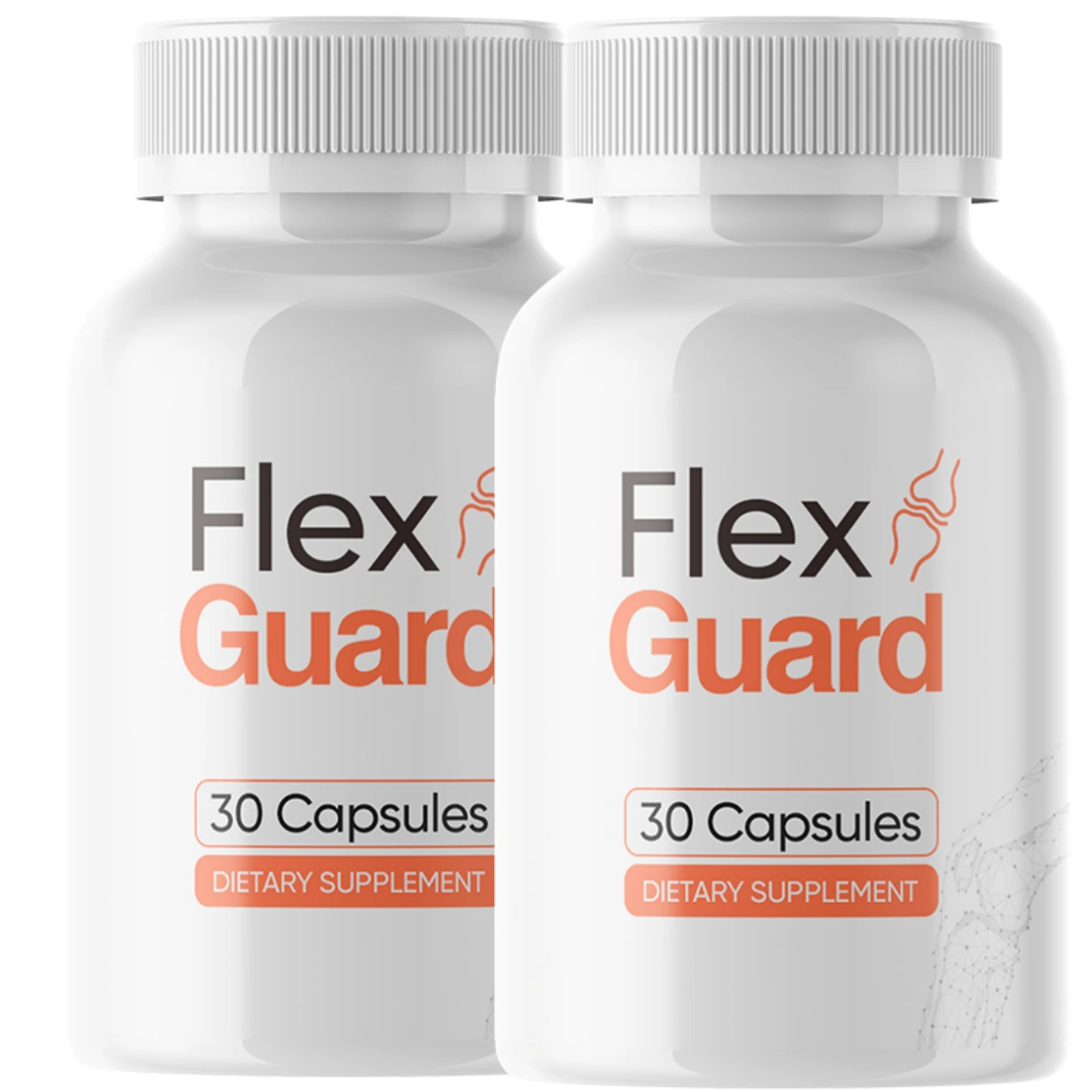
The FlexGuard allergen line is printed on the carton
CONTAINS: SHELLFISH (CRAYFISH), immediately under the other-ingredients line. If that applies to you, it is the end of the decision and no price changes it.
Two bottles $158 · six bottles $294 · 60 days from the date of purchase
Order FlexGuard On The Official WebsiteOne capsule a day · 30 per bottle · lot FLE-26/GO-6202
Allergy and intolerance are not the same question
A large part of the confusion here is that people use one word for two different things.
A shellfish allergy is an immune response to a specific protein, and at its worst it is fast and dangerous. An intolerance is a different mechanism entirely, usually digestive, unpleasant rather than dangerous, and not mediated by the same antibodies.
Someone who avoids shellfish because it disagrees with them is in a different position from someone who carries adrenaline, and only one of those two is really asking the question this post is about. Settling which one you are is worth doing before you look at any joint supplement, not just this one.
The practical route is unglamorous: if you have never had it confirmed, the answer is not on a supplement website, and a single conversation settles a question that will otherwise come up every time you read a label.
If you carry adrenaline for shellfish, the sensible reading of a printed CONTAINS: SHELLFISH statement is that this is not your product, whatever a fifteen-person study found. There are alternatives, and the next section is about what they cost you.
The alternatives, and what choosing one costs you
There are three ways round a shellfish-derived glucosamine and each has a consequence.
The first is vegetarian glucosamine, produced by fermenting corn or another carbohydrate source with a fungus. It is chemically the same molecule, it carries no shellfish declaration, and it usually costs more. A label that has gone to the trouble will say so on the front, because it is a selling point.
The second is to skip glucosamine entirely and take an ingredient with its own record. The 2025 network meta-analysis of 39 trials ranked Boswellia first of the supplements it compared for pain and stiffness, and Boswellia has no shellfish anywhere near it.
The third is to skip the shelf. The rheumatology guideline recommends exercise, weight management and self-management above every supplement it reviewed, and none of those carries an allergen line.
- Fermented glucosamine is the same molecule with no shellfish source, at a higher price.
- Boswellia serrata has the strongest recent evidence in the category and no allergen issue.
- Turmeric extracts are widely studied and shellfish-free.
- Exercise and weight management outrank every supplement in the guideline.
- A confirmed diagnosis costs one appointment and settles the question permanently.
How a shell becomes a supplement
The route from a shell to a capsule explains most of what is confusing here, and it takes a paragraph.
Crustacean shell is mostly chitin, a long chain of linked N-acetylglucosamine units, bound up with protein and mineral. Manufacturing separates those out, then breaks the chitin chain down by hydrolysis into single units, which are converted into the glucosamine salt that goes into a bottle.
Two things follow. The molecule that arrives in the capsule is a small sugar, chemically a long way from the muscle protein that causes shellfish allergy. And the separation of shell from flesh, and the removal of residual protein, are steps in a process rather than properties of the molecule, which is why a careful answer to the allergy question is about a manufacturer rather than about glucosamine in general.
That is also why the tolerance study tested one preparation, and why its authors framed the result as being about that preparation.
What a contains line does not cover
A contains statement answers one question and people read it as answering three.
It tells you that an allergenic source was deliberately used. It does not tell you how much protein survived the process, because no label states that. It does not cover a source that is not on the required list, and it says nothing about cross-contact from other products made on the same line unless the manufacturer has chosen to add a separate statement.
The practical version for somebody with a serious allergy is that a contains line is a reliable yes and its absence is a weaker no. A product with no declaration is probably free of the allergen; a product with one definitely used it.
The labelling guide is the reference for what has to be declared and in which of the two permitted forms.
Six things to check on any glucosamine label
Whatever you end up buying, these six checks take about a minute on a bottle in a shop.
- Find the contains statement, which sits immediately after the other-ingredients line.
- Check whether the glucosamine is described as shellfish-derived or vegetarian. If neither word appears, assume the first.
- Read the other ingredients line as well: the capsule shell lives there, and gelatin rules out more diets than most people expect.
- Check the salt form, because sulfate and hydrochloride have different evidence records.
- Multiply the per-capsule amount by the daily serving and compare it with 1,500 mg.
- If the allergen line applies to you, stop at step one. The other five do not matter.
On this carton the answers are: the contains statement is present and names crayfish; the glucosamine is not described as vegetarian; the shell is hypromellose, so it is suitable for a vegetarian diet even though the contents are not shellfish-free; the salt form is sulfate; and the amount is 500 mg once a day. The full panel is on the supplement facts page.
The sentence that should decide it
Most of what a supplement page argues about is a matter of degree. Amounts are smaller or larger than a trial used, evidence is stronger or weaker, a window is counted one way or another.
An allergen line is not like that. It is the one statement on a carton that can make every other statement irrelevant, and it costs nothing to read first. That is why it appears on the first screen of this product's home page, in its safety section, on its suitability page and in the footer of every page here.
Four places for one sentence is a lot of repetition. For a fact that decides whether somebody can take a product at all, it is the right amount.
- Villacis J, Rice TR, Bucci LR, et al. Do shrimp-allergic individuals tolerate shrimp-derived glucosamine? Clin Exp Allergy. 2006;36(11):1457-61. PMID 17083356. Fifteen shrimp-allergic adults took 1,500 mg of shrimp-derived glucosamine with no allergic reaction; the allergen is in the flesh, not the shell. https://pubmed.ncbi.nlm.nih.gov/17083356/
- Dietary Supplement Labeling Guide. U.S. Food and Drug Administration. https://www.fda.gov/food/dietary-supplements-guidance-documents-regulatory-information/dietary-supplement-labeling-guide
- Zhang Y, Gui Y, Adams R, et al. Comparative effectiveness of nutritional supplements in the treatment of knee osteoarthritis: a network meta-analysis. Nutrients. 2025;17(15):2547. PMID 40806131. Thirty-nine randomised trials, 4,599 patients; Boswellia ranked first for pain and stiffness. https://pubmed.ncbi.nlm.nih.gov/40806131/
- Kolasinski SL, Neogi T, Hochberg MC, et al. 2019 American College of Rheumatology/Arthritis Foundation guideline for the management of osteoarthritis of the hand, hip, and knee. Arthritis Rheumatol. 2020;72(2):220-233. PMID 31908163. https://pubmed.ncbi.nlm.nih.gov/31908163/
- Glucosamine and Chondroitin for Osteoarthritis: What You Need To Know. National Center for Complementary and Integrative Health, National Institutes of Health. https://www.nccih.nih.gov/health/glucosamine-and-chondroitin-for-osteoarthritis
- 21 CFR 101.36, Nutrition labeling of dietary supplements. Electronic Code of Federal Regulations. https://www.ecfr.gov/current/title-21/chapter-I/subchapter-B/part-101/subpart-F/section-101.36
Read the FlexGuard allergen line before anything else on the box
It is the one statement on a carton that can make every other statement irrelevant, and it takes five seconds.
Two bottles $158 · six bottles $294 · 60 days from the date of purchase
Order FlexGuard On The Official WebsiteOne capsule a day · 30 per bottle · lot FLE-26/GO-6202